Category: Featured

Featured posts show up in the default sidebar.

  • Production Management Guide: Function, Importance, and Principles [2023]

    Production Management Guide: Function, Importance, and Principles [2023]

    Producing anything, be it a product, creative project, or an entire event, requires a series of well-executed to-dos. Production management is the process of doing just that: planning, organizing, and sequencing tasks to make your production run smoothly and efficiently. 

    If you’ve found yourself here, you’re likely looking to chat through the ins and outs of production management. And we’re beyond happy to help. Why? 

    LÜK is a production partner for some of the best–Clinique, Adidas, Amazon to name a few–and thus knows what it takes to make a production great. Be it casting, navigating independent contractor payroll, or managing all communication therein, the team at LÜK is ready to guide the way when it comes to smooth, effective production management.  

    Let’s get into it!

    What is production management in the entertainment industry?

    Production management in the entertainment industry refers to the crucial role of overseeing and coordinating the numerous elements involved in the production of movies, TV shows, music videos, theater performances, and any other forms of entertainment content. 

    Why is Production Management Important?

    Production management encompasses all elements responsible for ensuring a smooth rollout of the production process, effective management of resources, and a final product that’s delivered on time and within budget.

    Effective production management is the only sure route to successful production. The amount of money, time, and energy involved in the creation of any project, product, or content requires managing systems that optimize resources, ensure high quality, and deliver a beautiful result.

    Key Elements of Production Management
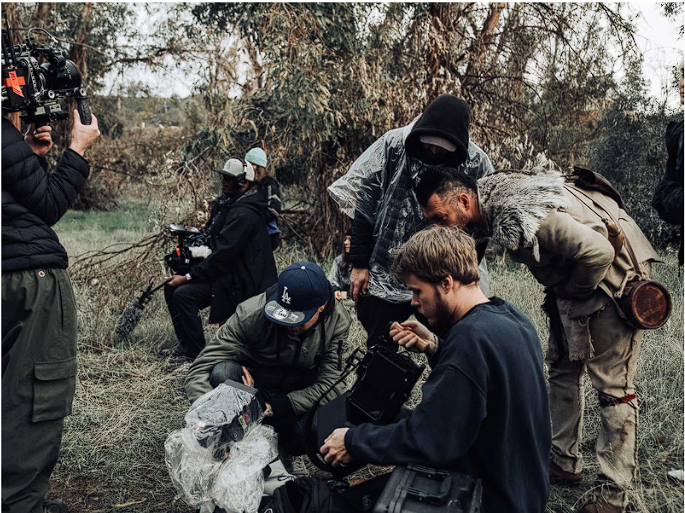
    production management

    Production

    When beginning a production, there is a balance of preparing for and responding to hurdles. It’s important to consider the scope and budget of the project, the creative direction, the deliverables and due dates, and all the folks and details you’ll need to manage. 

    At LÜK we partner with producers to take the task of casting and the minutiae of entertainment payroll off their plate. The amount of communication, detail management, and sheer time saved with our partnership proves to be of major value as productions come together. Beyond that, producers can lean on our seasoned team members for guidance throughout. The delegation and teamwork involved come together to optimize and scale workflow for shoots to come. 

    Whether you are leaning on a company like LÜK Network to handle the ins and outs of casting and payroll–or doing it all by yourself–you’ll want to prepare for all possible roadblocks and lay out a handful of elements for the task ahead. 

    In the context of production, “legal” teams look after everything from compliance and laws to the regulations and legal requirements of the particular production you’re putting on. 

    Some elements include: 

    • Intellectual Property Rights: Production teams should have awareness of details such as copyrights, trademarks, and patents, and can receive help from their counsel in avoiding ever infringing the intellectual property owned by others.
    • Employment Laws: Production companies must comply with employment laws and regulations governing matters such as minimum wage requirements, working hours, overtime, employee benefits, and non-discrimination policies. This ties into a need for the correct classification of employees under California labor laws and any other legal concerns that could arise.
    • Permits and Licenses: Depending on the nature of the production, certain permits and licenses may be required. This can include permits for filming in specific locations, permits for special effects, licenses for music usage, or any other permits relating to the production at hand.
    • Contractual Agreements: Productions usually involve contracts or deal memos that detail their agreements with talent, crew members, vendors, or distributors. Ensuring that these contracts are legally sound, properly drafted, and executed is important to protect the rights and interests of all parties involved.
    • Security: There are typically measures taken on productions to protect the safety, confidentiality, and integrity of people, assets, and information involved in the production process. It covers anything that ensures the smooth, safe, and secure operation of the production.

    Accounting

    Accounting is simply the financial management of transactions, expenses, payouts, and revenues related to the production process. On productions, especially in California, there are important regulations to follow in payout and employee classifications. 

    LÜK Network is a dedicated partner in the management and adherence to all the ins and outs of production accounting and the rule-following therein. Our tool LÜK Pay empowers producers with comprehensive, thorough payout management, and provides talent with streamlined, transparent access to their compensation. 

    LÜK production management software
    The LÜK Pay platform.

    It’s a true win-win for everyone involved.

    Stages of Production Management

    The stages of production management vary between the particular type of shoot or production at hand and its implied details and processes. However, in general, production management can be divided into the following stages:

    1. Production Planning

    The planning stage involves identifying your goals, figuring out what is required to see them through (such as team, equipment, etc.), and developing a production plan. This includes setting production goals, establishing timelines, and creating a budget–as well as determining the sequence of tasks and what strategies will optimize efficiency and productivity. 

    Folks will often create a production workbook that serves as a comprehensive tool for planning and project management. It’s a central reference guide for managing aspects of the production process. 

    Contents vary from job to job, but some elements are pretty standard for production at large. Those standard operating procedures become the guideline for the rhythm of your shoot and shoots to come.

    2. Pre-Production

    When planning your shoot, you are in “pre-production mode.” This is the point where you are planning, preparing, and organizing for a smooth production ahead. As you carry on into future productions, referring to your production workbook and other tools from pre-production that optimize your workflow becomes essential.

    3. Production Control

    Production control refers to the practice of ensuring production operations run smoothly, resources like money and time are spent effectively, and deliverables are delivered in the highest quality in the best due time. This flow involves analyzing data and communicating with all parties involved to be sure folks have what they need for a job well done. 

    Organization and outsourcing are everything in this line of work. LÜK Network’s tools in particular create dividends on production time saving that cannot be overstated. Having one tidy place where the history of your productions, payroll, and talent lives proves to be invaluable for our roster of top-tier clients.

    4. Post-Production

    Post production is the phase of a project that takes place after imagery is captured. It encompasses those processes of refining the assets gathered during the shoot. Whether you are video editing, retouching, audio mixing, or adding VFX, this process is significant and requires as much care and attention to detail as any other phase of production.

    5. Production Delivery

    Production delivery is the phase of production wherein a quality product is delivered to a client or consumer. At this stage, producers have ensured their deliverable is accurate, of high quality, and complete. 

    Before this stage, there will be plenty of quality control checks, review periods, and all related communication.  

    6. Process Improvements

    Process improvements in production refer to any improvements made to ensure better efficiency, quality, or general upgrades to the process or final result. Top-notch producers will use each production as an opportunity to identify and implement improvements to their process. 

    Oftentimes, these upgrades will be noted in their Production Workbook or Standard Operating Procedure guide, aka SOP. This empowers folks to pass along knowledge and nuance to their teams for best practices in shoots to come. 

    Improve Your Production Management Processes

    Producing is a significant undertaking with the to-do list to match. As you navigate your next production, there are several steps that can be taken to improve and elevate your process. In first identifying a lack in productivity, quality, or systems management, you can then pinpoint and foster continuous improvement as you grow. 

    One of the best tools to leverage is in building an incredible team to whom tasks can be delegated. For on-set crew, word-of-mouth reccos are key–but for casting and payroll, LÜK Network is unmatched. 

    Our tools were built for today’s producers to streamline the talent casting and booking process in ways that wholly lift the tedium and time of casting and paying talent. Give us a whirl to upgrade, elevate, and navigate your next production.

  • Best Call Sheet Template: How to Create a Call Sheet for Your Production

    Best Call Sheet Template: How to Create a Call Sheet for Your Production

    If you’ve ever been on set, you know how crucial the call sheet is for everyone involved.

    As a shoot draws nearer, crew and agents alike are all over producers for this coveted guide. Everyone wants the goods for their call time (to plan for sleep), location (to plan for distance and travel), and all other details (to plan an outfit and general vibe) as they head into the big day. 

    Call sheets are the best baseline for communication, organization, safety, and details for the 

    whole crew. While you might have your call sheet system locked down, you might be here looking for a bit of guidance. 

    If that’s the case, LÜK Network is here to help with this review of some of the best call sheet templates and how to make a call sheet for a shoot.  

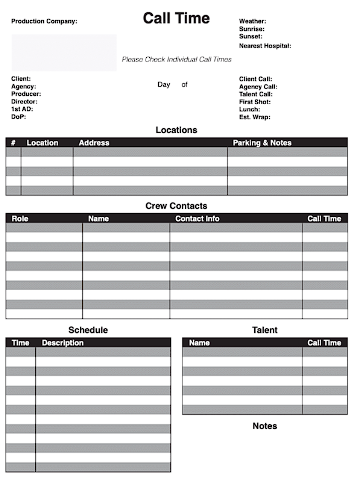
    What to Include on Your Call Sheet

    Call sheet

    1. Production Title

    When naming your project, it’s best to choose a descriptive, keyword-rich, and consistent name for the shoot. Striking the balance between descriptive and concise is the best way to stay organized and easily find your project in the future.

    2. Date, Day of, & Call Time

    It’s crucial that the call sheet lists clearly and correctly when the shoot will be. Folks will refer to the call sheet leading up to and following the shoot for various reasons. 

    Accuracy is key!

    3. Location & Weather

    Location and weather must be listed for obvious reasons as well. People need to plan how they dress, when they leave, and get a bearing on all related details for their day ahead.

    4. Shooting Schedule (with Meal Times)

    People will refer to call sheets for the shooting schedule as you work through your day. Reasons to include this on your call sheet include, but are not limited to:

    • Time management: A shooting schedule helps the cast and crew plan their time and ensure they are prepared for the shots and scenes that will be filmed that day. It helps everyone stay on track and ensures that the production stays on schedule.
    • Coordination: A shooting schedule helps coordinate the various departments involved in the production, including the camera department, lighting department, and sound department. By outlining the order and timing of shots, each department can prepare for its part in production and ensure everything runs smoothly.
    • Efficiency: A shooting schedule helps the production run efficiently by ensuring that the cast and crew are prepared and ready for each shot or scene. This reduces downtime and ensures that everyone is focused and productive throughout the day. Not to mention, it makes for fewer questions directed to production when each team has access to the plan.
    • Communication: Including the shooting schedule on the call sheet ensures that everyone on the production team is aware of the plan for the day. This helps avoid confusion or miscommunication and ensures that everyone is on the same page.

    5. Cast/Talent

    Maybe the most important part! Including all names and relevant information is crucial for a handful of reasons. 

    • Contact information: The call sheet includes contact information for all members of the production team, including their name, position, and phone number. This allows members of the team to easily contact each other if there are any changes or updates to the schedule, or if anyone happens to be running late.
    • Role identification: Including every name and their role on the call sheet helps ensure that everyone on the team knows who is responsible for what. This helps avoid confusion and ensures that everyone is clear on their tasks and responsibilities.
    • Safety: Including every name on the call sheet is important for safety reasons. In the event of an emergency, it is important to have an accurate and up-to-date record of all individuals on set.
    • Legal reasons: In some cases, it may be necessary to have a record of who was present on set for legal reasons. Including every name on the call sheet helps ensure that there is a clear record of who was on set at any given time.

    Casting, Booking, & Payroll–Simplify Your Entire Production

    6. Crew List

    It’s important to include names, roles, and contact information for the crew for all the same reasons listed above. Be it role identification, phone numbers, or simple organization, you need to know the players involved in the day ahead.

    7. Contact Information

    Including contact information for all folks on a shoot allows members of the team to easily contact each other. It’s nice to have it all in one cohesive, tidy place leading up to the shoot, or to refer back to in the future

    8. Lodging & Travel Details

    Including lodging and travel details are crucial to ensure your team is well-prepared, arrives on time, and is comfortable and ready to work. It is an important logistical and communication tool to keep in one easily referable place. 

    It’s also important to include parking information to be sure everyone’s vehicles are parked safely and efficiently. This extra detail can help avoid confusion and ensure that everyone knows where to park and does so as quickly as possible.

    9. Extra Notes

    In addition to all the aforementioned details, call sheets are a great place to include any other important communication for your crew. This can include:

    • Sunrise and Sunset Times: This is helpful for planning for getting the most out of the light.
    • Props and Wardrobe: Including information about any props or wardrobe items that will be used during the shoot can help ensure that everyone is ready and available on set.
    • Special Instructions: If there are any special instructions or considerations for the shoot, such as using specific camera equipment or working around a particular lighting setup, these can be included on the call sheet to ensure that everyone is aware of them.
    • Safety Information: If there are any safety concerns or precautions that need to be taken during the shoot, such as working with hazardous materials or in challenging terrain, these should be included on the call sheet to ensure that everyone is aware of the risks and knows how to stay safe.

    Make Every Part Of Your Production Simpler

    Best Call Sheet Templates

    With a thick to-do list, you may find it tedious to organize and format every last detail into a presentable call sheet. It’s a lot! Thankfully, there are templates readily available to lend a hand.

    1. Boords

    boords logo

    Boords is a web-based platform that provides a simple, intuitive interface and allows teams to collaborate and streamline their production workflows. You can create a call sheet using Boords’ “Export” feature – select the “Call Sheet” option, choose your formatting preferences, and export the call sheet as a PDF.

    2. Google Sheets

    google sheets

    Google Sheets is another great web-based platform to use for making call sheets. You can fully customize your document, setting up columns for each of the categories you want to include (such as date, call time, location, cast, crew, and notes) and then entering the relevant information for each category. You can also use Google Sheets to format your call sheet, share it with your cast and crew, and update it as needed.

    3. Microsoft Excel & Word

    microsoft logo

    Both Microsoft Excel and Microsoft Word allow you to create tables and format them in a way that is similar to how you would create a call sheet in Google Sheets. You can fully customize your document, setting up columns for each of the categories you want to include (such as date, call time, location, cast, crew, and notes) and then entering the relevant information for each category. 

    Simply save it as a PDF and send it off as needed.

    4. Set Hero

    Set Hero logo

    SetHero is a web-based software that helps production teams manage and coordinate their projects. It includes a call sheet tool that allows you to create and distribute call sheets to your cast and crew. Conveniently, once you have created your call sheet in SetHero, you can easily distribute it to your cast and crew via email or the SetHero app. 

    SetHero also allows you to track who has received and confirmed their call time, as well as any changes or updates to the call sheet. This can help streamline communication and ensure all shoot details are handled in one comprehensive place.

    5. StudioBinder

    studiobinder logo

    Similar to SetHero, StudioBinder is a production management software that offers tools to help with scheduling, script breakdowns, shot lists, call sheets, and more. For Call Sheets, once you have filled out a template with all the necessary details, you can preview and share call sheets with your cast and crew via email or by downloading a PDF version. 

    StudioBinder also allows you to track who has received and confirmed their call time, as well as any changes or updates to the call sheet. It’s another great producer tool to keep your details in one place.

    Streamlined Casting, Booking, & Payroll: All in One

    Best Tips for Using Your Call Sheet Templates

    Call sheet templates

    Customize For Production Type

    While you may have your call sheet layout down pat, it can be fun or useful to customize each for a particular shoot. You can do so by adding or removing sections, changing the layout or design, and adding additional information specific to the shoot. 

    Back Up Your Call Sheets

    There are several ways to back up a call sheet and the best method will depend on your specific needs and preferences. By taking the time to back up your call sheet, you can ensure that you always have access to the information you need, even in the event of an unexpected issue. 

    Typically saving your call sheet in a cloud-based drive is the safest, although emailing yourself a copy works, too.

    Proofread Your Call Sheet

    For obvious reasons, you want your call sheet to be as accurate as possible for everyone involved. Take a glance and be sure it’s all squared away before sending off.

    Send in PDF Format

    Sending a call sheet in PDF format is best practice for a handful of reasons:

    • Compatibility: PDFs are easily opened on a variety of devices and operating systems, ensuring that everyone on the production team can access the call sheet regardless of their technology setup.
    • Formatting: PDFs preserve the formatting of the original document, which is important for ensuring that the call sheet is easy to read and understand. This can include details like fonts, colors, and layout.
    • Security: PDFs can be password-protected or encrypted to ensure that the information contained in the call sheet is secure and confidential.
    • Editing Prevention: PDFs can be created with editing restrictions that prevent unauthorized changes to the document. This can help ensure that the call sheet remains accurate and up-to-date throughout the production process.
    • Archiving: PDFs can be easily saved and archived for future reference, which can be useful for keeping track of production details and ensuring that all necessary information is available in case of any questions or issues that may arise.

    Use LÜK Network

    Producing a photo or video shoot is a major undertaking that calls for a dynamic array of tasks and skills. Effective organization and delegation to skilled team members are the only way to get the job done. In this way, for casting in particular, LÜK is your very best friend.

    Whether you’re looking for fresh faces, setting up cattle call go-sees, coordinating talent details, or simply trying to keep it all organized, we’ve got your back. There’s a tool and a pro available at the ready for just about any casting question or lift you might have.

    Streamline Your Production with LÜK Network

    As you ramp up for your next shoot and cobble a call sheet together, leaning on production tools can be a godsend in the time-saving department. While there are dozens of stellar tools for call sheet and shot list generation, there’s really just one for big-picture casting solutions…(It’s LÜK!) 

    If you’re trying to outsource busy work, save time, and reduce your back and forth when that call sheet is finally ready, you can lean on LÜK. We’re a casting cure-all and would be thrilled to lend a hand.